

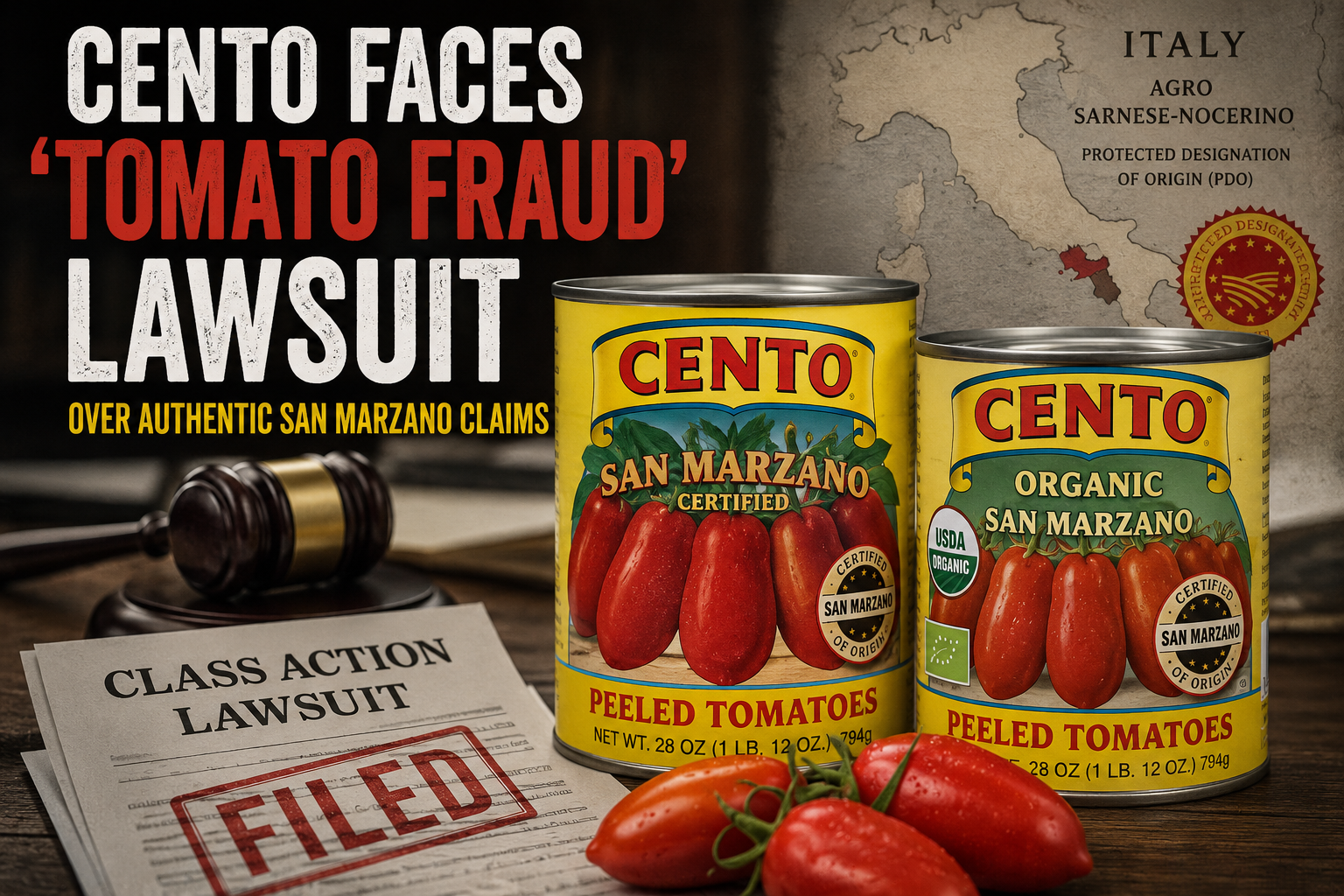
A major food labeling controversy has emerged in the United States as New Jersey-based Cento Fine Foods faces a proposed class action lawsuit over allegations of “tomato fraud.” The lawsuit, filed in California by residents Mike Andrich and Natalie Gianne, claims that the company’s popular San Marzano Certified Peeled Tomatoes and Organic San Marzano Certified Peeled Tomatoes are falsely marketed as authentic Italian San Marzano tomatoes.
According to court filings, genuine San Marzano tomatoes are protected under the European Union’s “Protected Designation of Origin” (PDO) system, which strictly regulates where and how these tomatoes can be grown, processed, and packaged. Much like Champagne must come from the Champagne region of France, authentic San Marzano tomatoes are required to originate from a specific region in Italy known as the Agro Sarnese-Nocerino area near Naples.
The lawsuit alleges that Cento Fine Foods is misleading consumers by presenting its products as authentic San Marzano tomatoes even though the company is no longer associated with the official Italian consortium responsible for overseeing and certifying the product’s authenticity. Court documents state that Cento reportedly left the consortium during the 2010s amid allegations related to certification practices.
Plaintiffs argue that Cento’s branding, packaging, and advertising create the impression that the tomatoes meet the traditional standards recognized by Italian authorities and the European Union. They further claim that the tomatoes sold by Cento do not possess the signature qualities associated with true San Marzano tomatoes, including their well-known sweetness, balanced acidity, rich flavor, and smooth texture.
Cento, however, maintains that its products are authentic and says its tomatoes are grown in Italy’s Sarnese Nocerino region. The company also states that its tomatoes are monitored through an independent certification organization called Agri-Cert, which it describes as an EU-approved third-party agency ensuring quality control from production to packaging.
Despite these claims, the lawsuit points out that Agri-Cert is separate from the official Italian consortium traditionally associated with San Marzano certification. The plaintiffs argue that this distinction is important because many consumers specifically seek tomatoes carrying the official PDO recognition tied to the original Italian standards.
The case has sparked broader discussions about food authenticity, international labeling laws, and consumer trust in premium imported products. If the lawsuit moves forward, it could raise important questions about how specialty food products are marketed in the American marketplace and whether consumers are being misled by branding that suggests official European certification standards.
The proposed class action seeks damages and potentially changes to how the products are labeled and advertised in the future. Cento Fine Foods has not publicly admitted wrongdoing, and the legal proceedings are still ongoing.










Leave a Reply